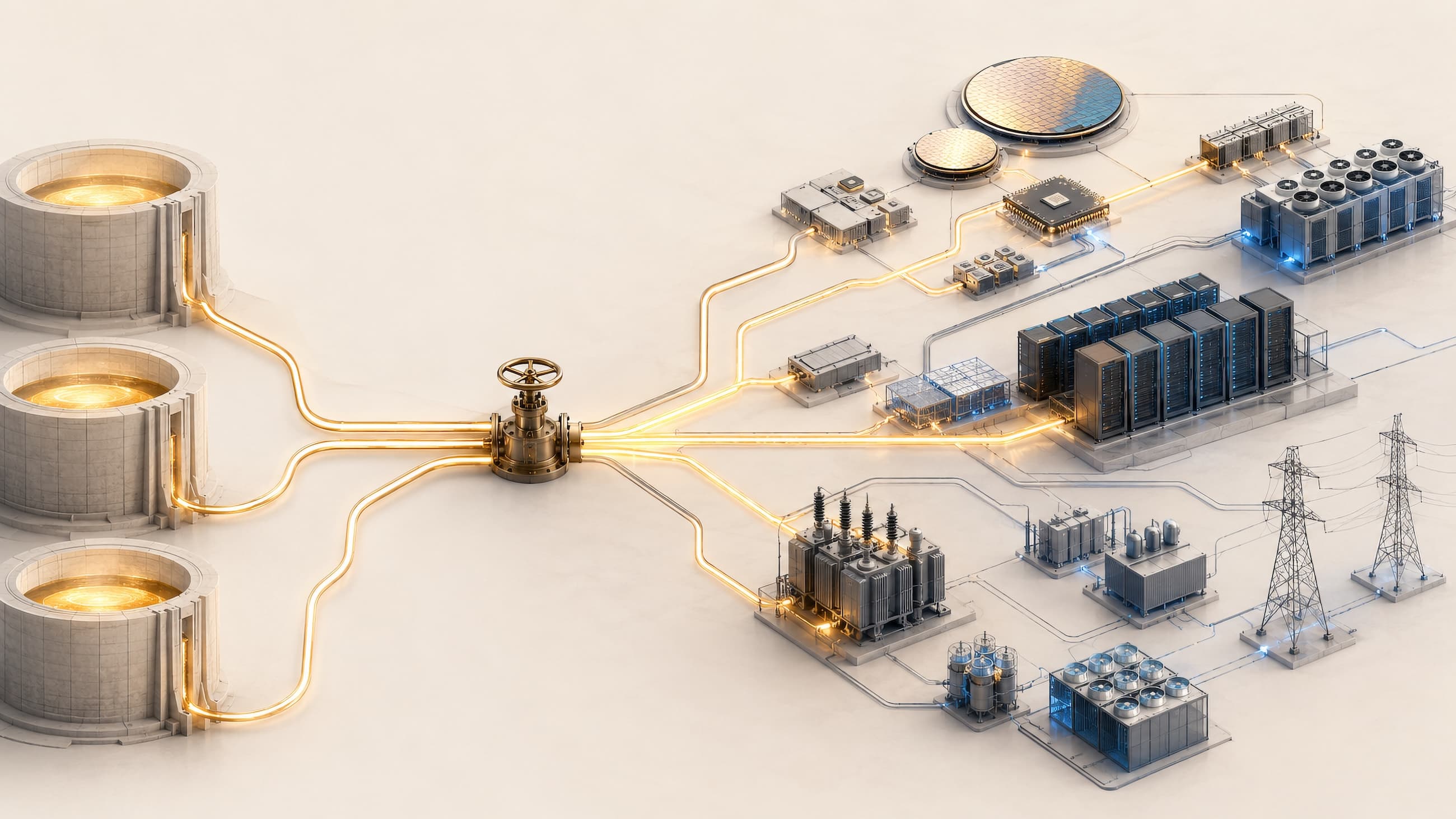
The AI trade is often described as a story of scarcity. Advanced chips, memory, data-centre power, and grid capacity are all in short supply.
But scarcity does not pay for itself. Someone has to buy it.
That buyer is a narrow group of hyperscalers and AI platforms whose spending supports much of the infrastructure chain. Markets have rewarded many companies receiving that spending, while becoming more demanding of those funding it.
The next phase of the AI trade may therefore hinge on bargaining power inside the chain, even if demand remains strong.
The AI trade is splitting in two
Some companies are sellers of scarcity. They benefit when customers compete for chips, memory, power access, equipment slots, and data-centre capacity.
Others are buyers of scarcity. They must secure that capacity before competitors do, even when costs are rising.
Both groups are exposed to AI demand, but their economics differ. A supplier can enjoy pricing power while its customer absorbs higher capital expenditure, weaker near-term free cash flow, and greater investor scrutiny.
Hyperscaler demand is not an unlimited external force. It comes from businesses with capital budgets, shareholders, and management teams that eventually have to defend the return on each dollar spent.
For now, the strategic pressure to keep spending remains powerful. No major platform wants to fall behind in compute capacity or model capability. That fear can make buyers price-insensitive for a time.
It does not make them price-insensitive forever.
Scarcity changes buyer behaviour
When suppliers capture more of the economics while buyers carry more of the cost, buyers have reasons to respond. They can negotiate harder, diversify supply, redesign contracts, build in-house capability, shift workloads, or delay lower-return projects.
Power infrastructure shows how this can unfold. Grid access, transformers, cooling, land, and interconnection queues increasingly determine how quickly data-centre capacity can be added. When the grid cannot move fast enough, large buyers seek more control through dedicated generation, direct energy contracts, and deeper infrastructure partnerships.
These workarounds do not eliminate scarcity. They change who owns it and who must finance it.
The same logic applies to memory, networking, and advanced packaging. A shortage may initially raise supplier margins, but prolonged scarcity encourages buyers to create alternatives. The premium is most durable while the buyer has no credible substitute.
Financing can accelerate that discipline before end-demand slows. As AI investment draws on leases, long-term commitments, equity issuance, and external funding alongside operating cash flow, the return hurdle becomes harder to ignore.
The strongest buyers can still afford the buildout. The question is whether they will keep funding it on terms that leave every supplier with the same share of the profit pool.
What investors should watch
Headline capital expenditure is no longer enough. Higher spending can signal confidence, but it can also show that the cost of staying competitive is rising.
Three indicators matter.
First, does free cash flow improve after the investment is funded? A company can afford a buildout and still earn weaker returns if every new wave of capacity requires another large increase in spending.
Second, do suppliers retain pricing power as buyers sign longer contracts, diversify supply, or internalise more of the stack? Long-term agreements improve revenue visibility, but they can also mark the point where buyers begin negotiating scarcity premiums down.
Third, does application-layer monetisation broaden enough to support the infrastructure underneath it? The cycle becomes more durable when more end users generate cash flow from AI, rather than when a few large buyers keep purchasing scarce inputs.
Who earns the next dollar
The main risk is that the marginal buyer stops underwriting every supplier's scarcity premium even while AI demand remains strong.
If that happens, the AI trade does not need to collapse for leadership to change. Supplier margins can narrow, buyers can regain bargaining power, and infrastructure can continue growing at lower implied returns.
AI will almost certainly require more compute. That alone does not determine who captures the economics.
The question is who earns the next dollar spent on it.