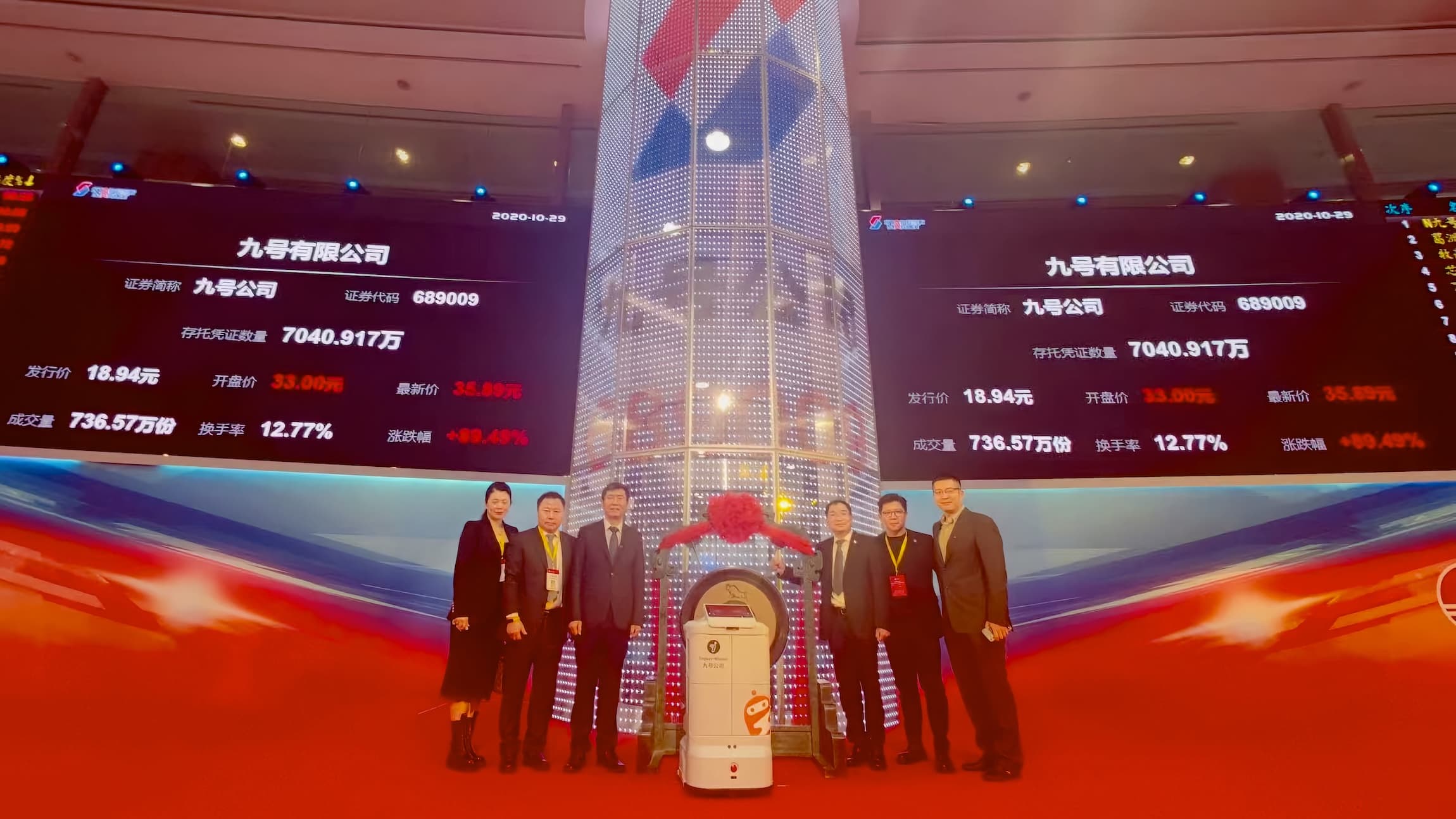
On October 29, 2020, Ninebot (689009.SS) listed on the STAR Market of the Shanghai Stock Exchange as the first red-chip company to list on China's A-share market through Chinese Depositary Receipts (CDRs). Its market capitalization subsequently peaked at approximately RMB 80 billion.
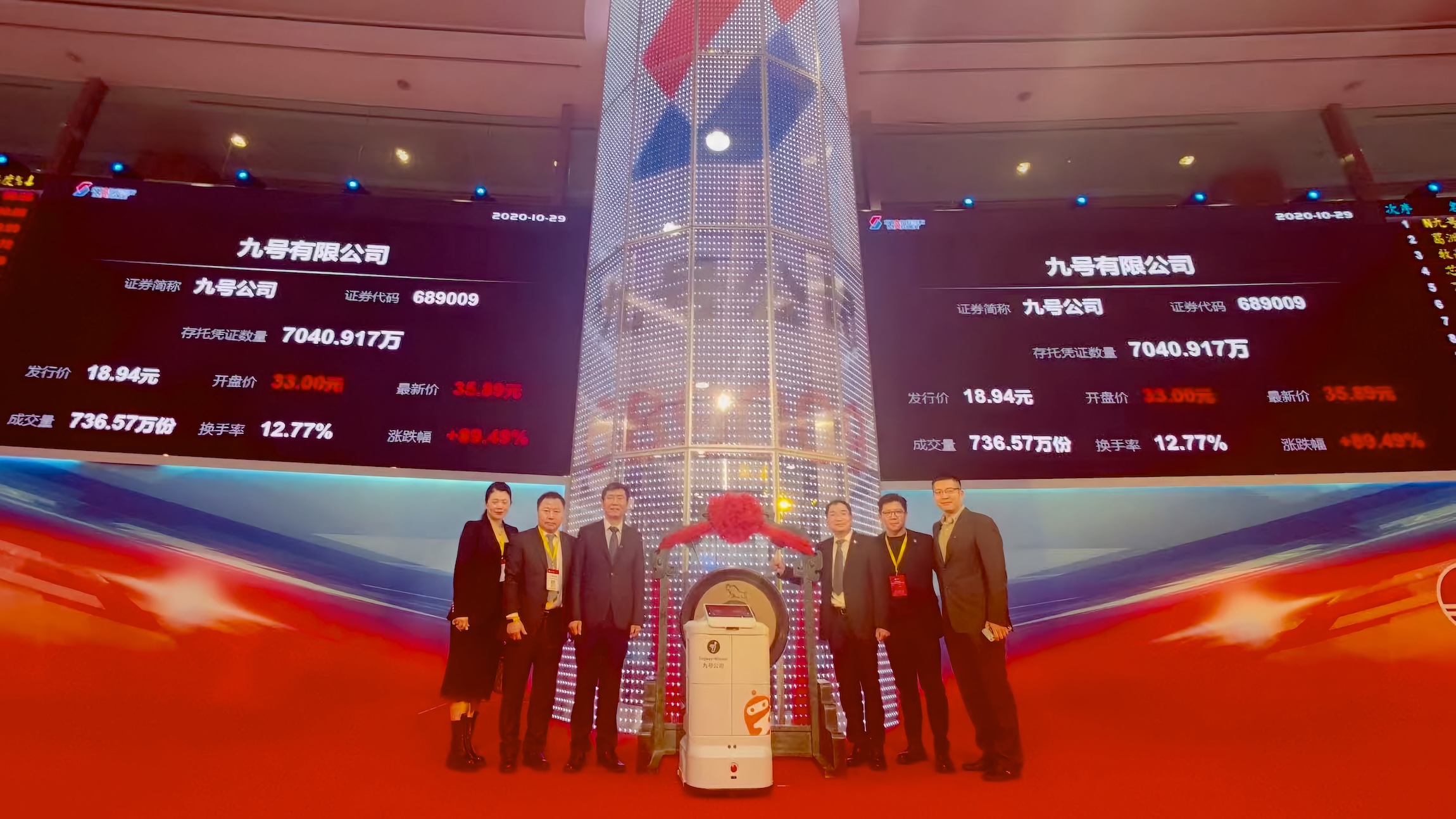 Members of Evermark's founding team (first and second from left), Xiaomi's co-founder (third from left), Shunwei Capital's co-founder (third from right), and Ninebot's founder (far right) at Ninebot's listing on the STAR Market of the Shanghai Stock Exchange on October 29, 2020.
For Evermark's founding team, the IPO closed a six-year investment cycle that began with an angel investment before Ninebot had formally launched its product. Over those six years, the team backed Ninebot through a patent dispute, a cross-border acquisition, several financing rounds, and its public listing. This was the first investment through which the team applied its long-term perspective and investment discipline across a complete company lifecycle.
Backing the Team Before the Product
In 2013, smart mobility was still an early industry. Most market attention went to companies that had already shipped products or could show rapid initial growth.
Before investing, Evermark co-founder Wang Wenzhong led the team in evaluating more than 30 self-balancing mobility projects. Ninebot's product had not formally launched, and the company did not lead the industry. The team based its decision on the potential of smart mobility and the founders' technical depth and execution capabilities in robotics and gyroscopic balancing technology.
The team held six rounds of in-depth discussions with Ninebot. It examined the company's technical barriers to entry, the founders' backgrounds and capabilities, and the industry's underlying dynamics rather than relying on the business plan alone.
In 2014, the team participated in Ninebot's angel financing as one of its earliest institutional investors. Ninebot later attracted investment from Xiaomi, Shunwei Capital, Sequoia China, WestSummit Capital, Intel, GIC, China Mobile, and other institutions.
The decision rested on industry research and judgment of the people building the company while information was limited and the business model remained unproven. The team researched before consensus and judged the company on its business fundamentals.
The Investor's Role at Critical Junctures
In 2014, Segway filed a Section 337 complaint with the U.S. International Trade Commission, which exposed Ninebot's U.S. business to significant patent risk. Ninebot could retrench, defend the case, or pursue a settlement.
Evermark founder Wang Wenzhong proposed that Ninebot acquire Segway in a David-and-Goliath style. The acquisition would end the prolonged patent dispute while giving Ninebot a path to consolidate the industry.
Ninebot was still an early-stage company. Segway controlled a globally recognized brand, important intellectual property, and established international distribution channels, while Ninebot lacked the capital to finance the cross-border acquisition independently.
The team then helped Ninebot bring in additional capital and supported financing from institutions including Xiaomi, Sequoia Capital, and Shunwei Capital.
In 2015, Ninebot acquired 100% of Segway and raised US$80 million in financing around the same period. The transaction gave Ninebot access to Segway's patents, brand, and global distribution network. It converted a major operating risk into a route for strengthening the company's intellectual property and international reach.
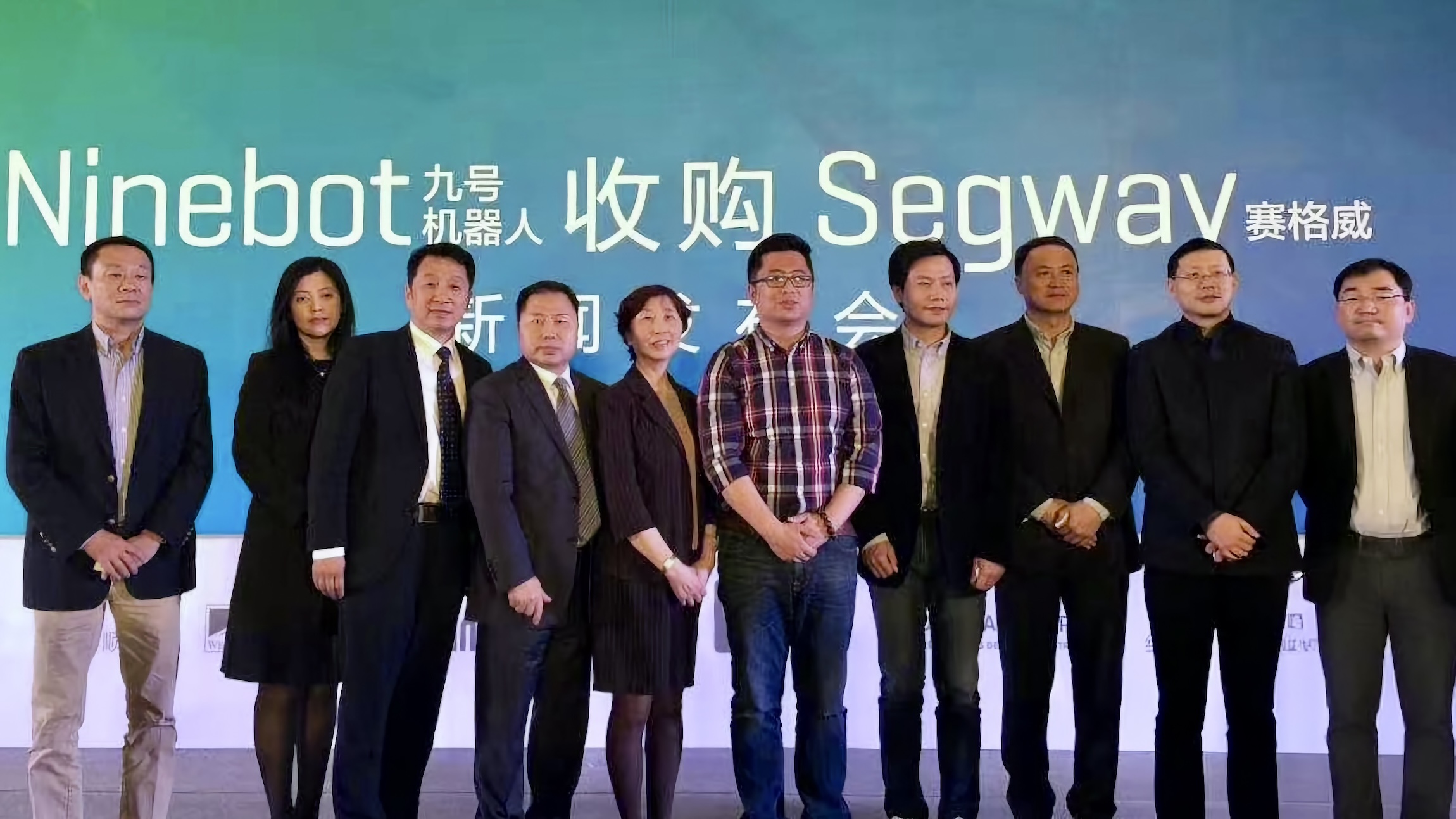 Members of Evermark's founding team (second and fourth from left) at the press conference announcing Ninebot's acquisition of Segway on April 15, 2015.

Xiaomi founder Lei Jun (left) and Evermark co-founder Wang Wenzhong (right) speaking with the media following Ninebot's acquisition of Segway in 2015.
This experience further shaped the team's understanding of the investor's role: capital is only the starting point. When a portfolio enters a critical strategic juncture, an investor's value also lies in independent judgment, resource coordination, and the ability to work with management to tackle complex issues. Beyond capital, the first step is to understand the real problems management needs to solve.
Beyond capital, understand what management actually needs to solve.
From Angel Round to IPO
As Ninebot raised later rounds and larger institutions joined, the team had opportunities to sell part of its early stake and realize returns. It chose to remain invested.
During preparations for the public listing, Ninebot sought to further stabilize management's voting control. The team supported management through an acting-in-concert arrangement, which extended the lock-up period on its own investment.
From the 2014 angel investment to Ninebot's STAR Market listing in 2020, the investment spanned approximately six years. During that period, Ninebot expanded its products, completed an international acquisition, raised several rounds of financing, and grew from an early-stage smart hardware company into a significant participant in the global micromobility industry. Ninebot was also the first IPO from the founding team's early-stage investment practice.
The team continued to hold because it judged that the original investment thesis remained intact. Earlier opportunities for liquidity did not override that judgment.
What One Investment Can Show
A single successful investment cannot define an investment capability or predict future results.
Across the Ninebot investment, the team made three decisions under different conditions. It formed a view before meaningful market validation, helped management address a patent threat through an acquisition and new financing, and held its position while the investment thesis continued to stand.
Evermark today operates across different markets, assets, and investment environmentsm, but its underlying investment philosophy has not fundamentally changed. Investing is not just about finding the next opportunity; more importantly, it is about forming independent judgments, allocating capital amid uncertainty, and giving sound judgments sufficient time to play out.