China may have weakened confidence in the durability of America's AI lead without necessarily erasing it.
In July 2026, Moonshot AI's Kimi K3 made the shift visible. Axios reported that it ranked ahead of Anthropic's previous flagship in Arena's broader text ranking while costing 40% less. Rankings can change, but Chinese competition no longer fits a cheap-but-weaker category.
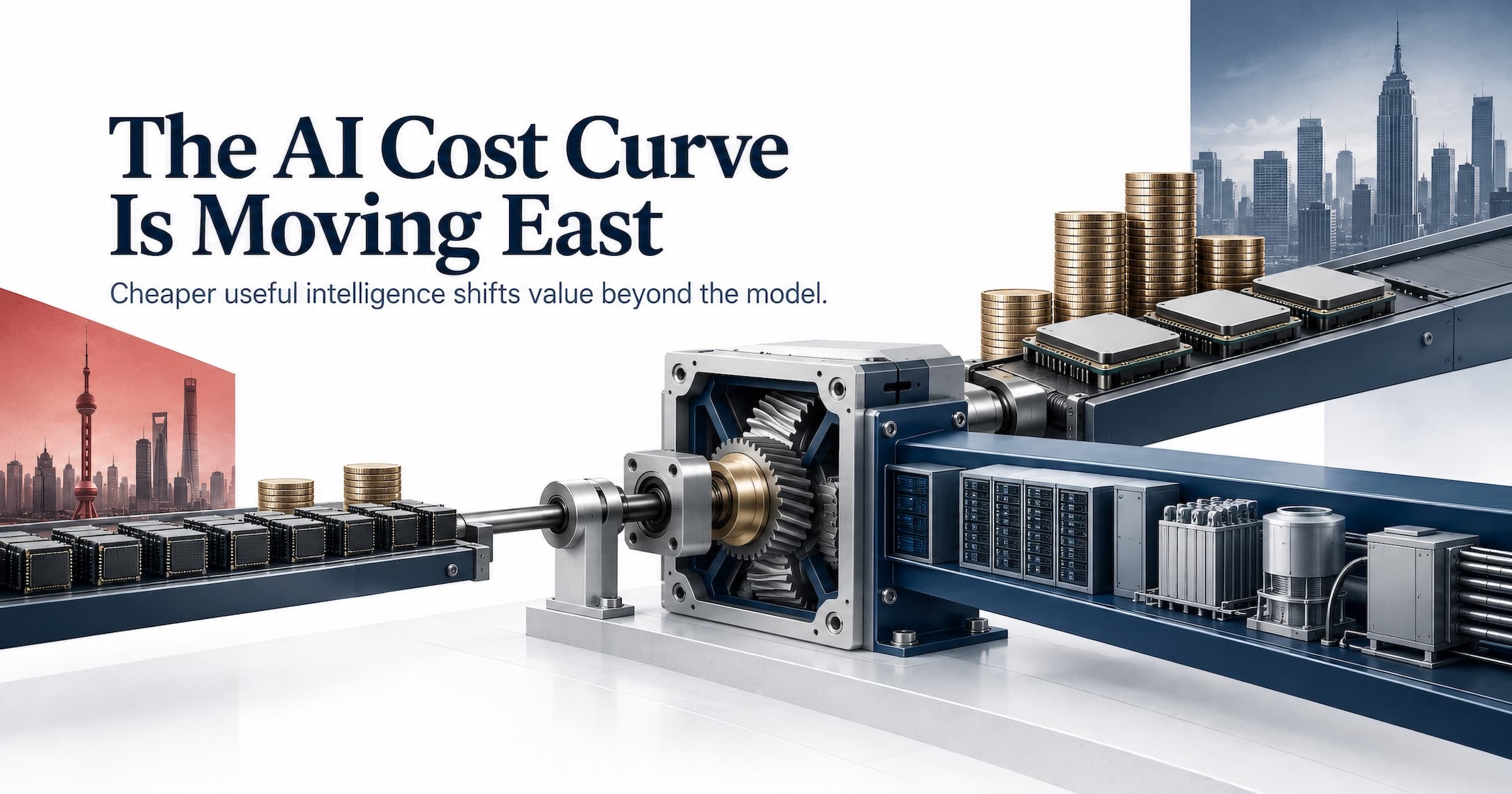
Reuters cited estimates that comparable Chinese models cost one-quarter to one-sixth as much as US systems. Stanford's 2026 AI Index found the two countries trading the performance lead since early 2025. The gap that matters is shifting from raw capability to useful intelligence per dollar.
From capability to cost
The frontier race rewards the best result regardless of price. Most workloads need a model accurate, fast and reliable enough for the task. As AI enters continuous use, price matters across millions of documents, code changes and tool calls.
Below the frontier, Chinese models offer large savings for modest trade-offs. Open weights allow third-party or self-hosted deployment. Developers can reserve leading US models for difficult work and route routine tasks elsewhere.
The model with the highest benchmark score does not automatically have the strongest commercial position.
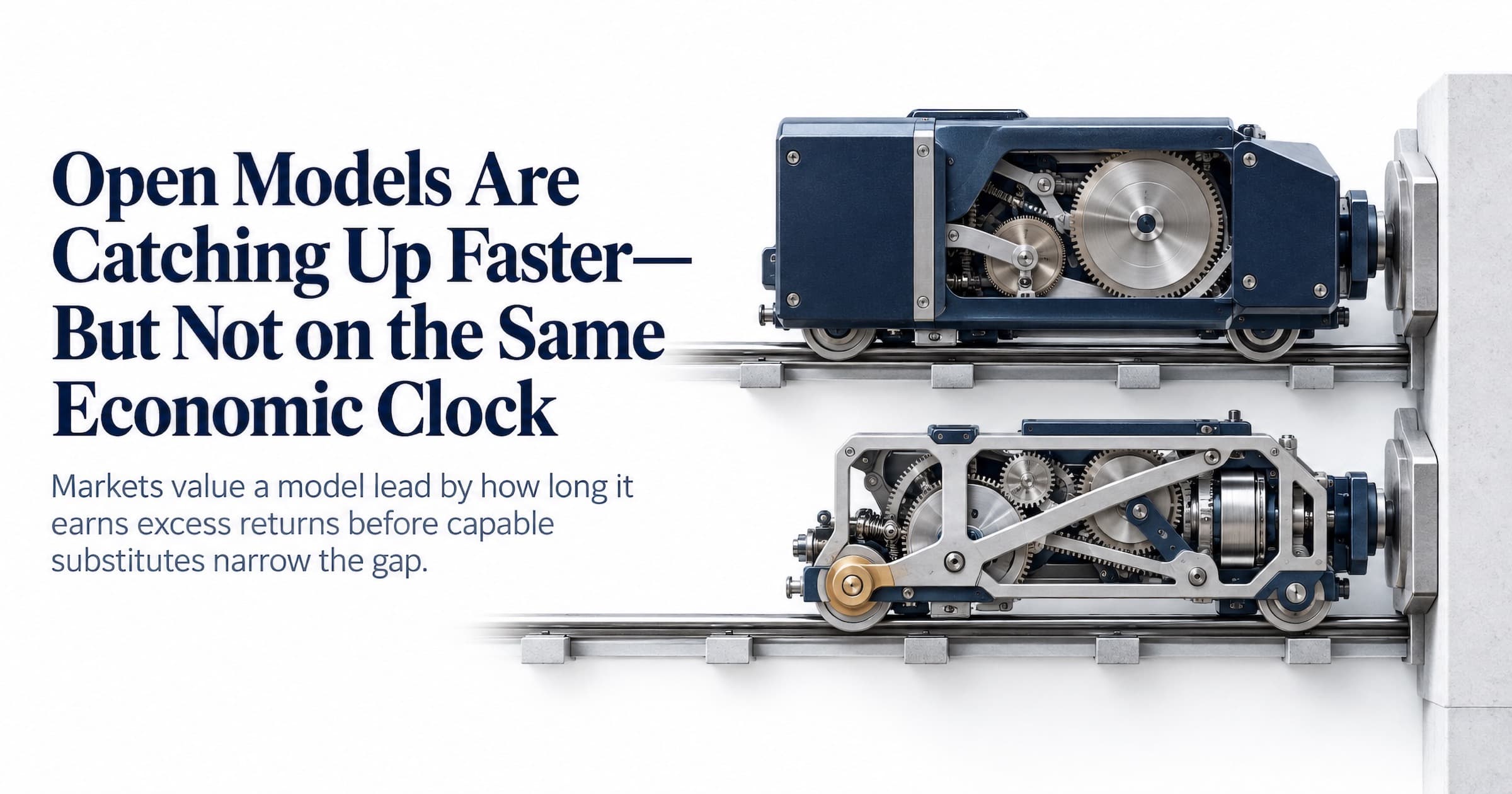
Premium intelligence remains scarce while adequate intelligence becomes a commodity.
Why constraints created an advantage
US export controls limited China's access to advanced AI chips, forcing laboratories to extract more work from available compute. That pressure favoured sparse architectures, distillation, quantisation, caching and better inference software. The techniques are global, but Chinese developers combined them quickly.
DeepSeek's 2025 breakthrough pushed Alibaba, ByteDance, Tencent and Moonshot toward open weights and aggressive pricing. Developers can optimise hosting and switch suppliers. Lower prices increase usage, optimisation and distribution. The advantage is a production system built around efficiency and rapid substitution.
A cheaper model does not make AI cheap
Models require chips, power and data centres; applications need security and oversight. Lower token prices can raise spending as agents run longer. Cheaper models can pressure provider margins while supporting infrastructure demand.
Sticker prices omit switching and governance costs. Regulated institutions must understand data processing, audits and policy exposure. Self-hosting reduces API dependence but transfers security and maintenance to the buyer. Low price is not low ownership cost.
What investors should test
Compare cost per completed task, including failed runs and supervision. A low-priced model is not cheaper if it creates expensive errors.
Separate usage from value capture. Open weights aid distribution but weaken margins. Follow revenue, gross margin and retention rather than downloads.
Price portability and policy risk. Moving workloads across models, clouds and regions reduces exposure. A cheap model can otherwise become an expensive dependency.
Where the value moves
US capital still finances the frontier, while Asian semiconductor capacity remains essential. Chinese developers increasingly influence the cost of intelligence.
As capability converges and prices fall, value can move toward distribution, trusted data, customer relationships and infrastructure. The winners will turn cheaper intelligence into cheaper completed work.